Building date: 1844, completed in 1847.
Original use: Residence
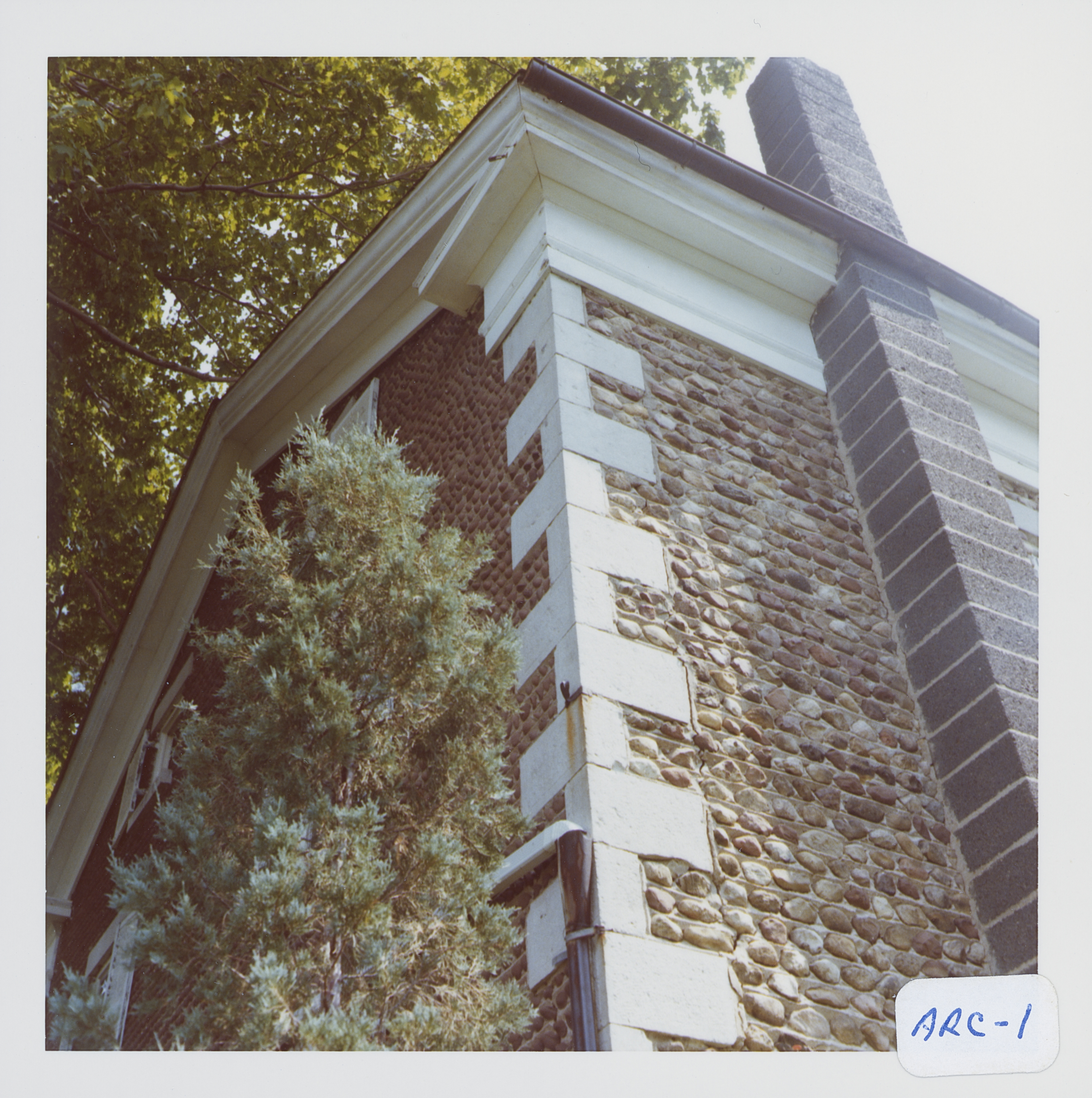
Corner structures: Tooled
Mortar application and content: Vertical heavy. Vertical pyramids
Types and uses of stones: Small red
Types and choice of windows:
Structures with similar masonry details:
Masons who worked on building: Skinner
Unique features:
Map views courtesy Google Maps. Address is Google Earth confirmed; 43°06'12.12"N 77°06'05.51"W. Current owner of record, Hohenboken as of the 2019 Tax Roll.
Town of Arcadia and Wayne County Maps
This house at 2659 Minsteed Road was built by Austin Lee in 1844. The building of this house was a long project. Preparations were made for some time. Lee accumulated a large quantity of stone and lumber, including one very large Whitewood tree about 4 feet in diameter and thousands of feet of basswood and hemlock and had carefully piled it up, sticks between each board and built a shed over it that it might be thoroughly seasoned.
On the last sleighing that spring he had a "bee" and drew a large pile of sand from back of the woods, the first ever taken from that spot. There were two or three loads of cobble stones from the lake for the facing of the wall. The "cut stones" for the quoins and sills came from Phelps, then called Vienna. The front door cap stone and sill each made a load. The job of building was let to a Mr. Skinner, not including the inside work. Edwin Lee thought the price was about $200. They came and laid the cellar wall, then went away and did another job to let this harden. They returned and laid the first story then went away again for several weeks and so on until it was finished.
Meanwhile the carpenters prepared the window and door frames, the sleepers and joists as the walls were ready for them, planing and matching the flooring. Every board in the house was hand planed and nearly all were sandpapered. While the workmen were absent the senior Lee would draw more stones from Phelps, besides a little farming and all the other work and business accompanying such a building.
A trip was made with two teams to Italy Hollow south of Geneva and where about 2,000 feet of pine lumber was purchased for $10 a thousand. The first stones came from Lake Ontario. Two men with a team went to the bar off Lake Bluff across the ice of the bay to load the cobbles and reached home about 1 a.m. This trip was made about 20 times, though sometimes if the weather was bad only part of a load would be brought.
The carpenter only did the work until the house was enclosed in the late fall. The nail heads had to be flattened and this was Edwin's job, he said. There were no finishing nails. He described in detail the scaffolding which was erected around the house for placing the cobbles. Ruel Taylor did the inside work.
He and his men worked evenings all winter. The doors were all made by hand at the farm. Austin Lee bought a butternut tree southwest of Newark and the stair railing and all connected with it were made of this butternut. A crane and tackle were used in digging the well in 1845. After the house was furnished in 1847, attention was turned to beautifying the place by setting out trees and shrubbery. Adapted from PP 159-160, Historic Homes In and Around Arcadia. Wilprint, Lyons, N.Y. 1982 by Cecilia B. Jackson, Arcadia Town Historian. Richard Palmer email 6/30/2020.
The text above, provided by Richard Palmer, has excerpts from a handwritten original letter from Mrs Paul Welcher on their Cobblestone house. Following is a transcription of pages 7 though 9 describing the building of the cobblestone house. A copy of this letter is courtesy of Kenneth and Barbara Parker of whom six generations of Parkers once owned the Parker Cobblestone House located at 2467 Parker Rd. near the Welcher house. Kenneth states "copy of hand-written letter on the Paul Welcher cobblestone house over on the Minsteed Road located a few miles north east of the Parker homestead. Mrs Welcher and my grandmother were good friends and both took a great interest in the cobblestone houses they lived in."
Page 7
hurry, for an accident happened - Father waited, and mother debated, and I guess I cried, have forgotten about that, but any way I wore different pants - now for the building of this stone house. Father had accumulated a large quantity of stone and lumber, including one very large whitewood tree - about 4 feet in diameter, and thousands of feet of bass wood and hemlock, and had carefully piled it up with sticks between each board and built an shed over it that it might be thoroughly seasoned and on the last sleighing that spring had a "bee" and drew a large pile of sand from back of the woods, (where Mr. Farusmonth's now stands) it being the first ever taken from there! It kept one or two men shoveling snow on the bare spots by it thawing so fast. Had 2 or 3 loads of "cobble stones" from the lake for the facing of the wall. The "cut stones" (caps and sills) came from Phelps (then Vienna) - The front door cap stone and sill each made nearly a load - The job was let to a Mr Skinner, not including the inside work - have forgotten the price, but think it was less than $200 - They came and laid the cellar wall, they went away and did other jobs to let this harden, then returned and laid the first story, then went away again for several weeks and so on until it was finished - Meanwhile the carpenters prepared the window and door frames - the sleepers ¹ and joists as the walls were ready for them, plaining [planing] and matching the flooring
Page 8
every board in the house being planed by hand and nearly all but the floors was sandpapered - - while they were about he would have to draw more stones from the fields and from the lake and cut stones from Phelps, beside a little farming and and the other work and business accompanying such building. He also went with 2 teams out to Italy Hallow, south of Geneva and got about 2000 ft of pine lumber, for about $10 per thousand, being about all the pine used in the house. The first stones he drew from the Lake he took a man with him and team and went to the Bar off the bluff across the bay on ice - I went with him, we where home about 1 o'clock in the morning - Father went about twenty times, but some times, being rainy would get only part of a load, and often reached home ten or 12 o'clock at night - Mr Parkins, the Carpenter, only did the work until it was enclosed, which was late in the fall, one of my jobs was the flatten the nail heads as there were no finish nails then, also had to putty the nail heads after being driven. In laying the wall after getting out of reach above ground, there were poles set about 10 or 12 feet apart all around the house about 6 or 8 feet from the wall and about as high as the walls were to be, then long poles lashed to them with hickory withs ² an inch or an inch and a quarter in diameter, and 6 to 8 feet long, and then scantling ³ laid across from them to the wall and plank
Page 9
laid on them making a scaffolding all around the house, then a crane and tackle and rope were fastened to the north east post, being larger than the rest with buckets a little larger than a molasses cask cut in two would be - would fill one of them with either mortar or stones and hoist it up with a horse to the scaffold and distribute it with a wheelbarrow. Then when they were above reach from the scaffold, the staging would be raised again. The inside work was done by Ruel Taylor and his men - they worked evenings, were here all winter - The doors were all made here by hand. Father went out south west of Newark and bought butternut tree for the stair railing and all connected with it - the house was not ready for occupancy until May the next year - the frame part was not moved until fall - the crane and tackle were used in digging the well in the fall which was in 1845 - In 1847 having finished the house Father turned his attention to beautifying the place by setting out trees and shrubbery - 2 pine, 1 fir tree, a tulip, 4 cherry trees, several lilac bushes in front and a Button wood and sassafras tree in rear of house, of which there put stands 1 Pine, 3 cherry trees in front, and a Button wood and Sassafras tree in rear, also the grape vine in the lane - The first I know about the school, there was a little school house on the Shorman Farm (now W. Ryder's) on the west side of the road, next to the Plighter farm, then, there was
¹ sleepers: any of a number of wooden pieces, laid upon the ground or upon masonry or concrete, to which floorboards are nailed.
² hickory withs: smaller poles of hickory wood.
³ scantling: a piece of lumber of small cross section.
"Cobblestone Structures of Wayne County" Lee and Welcher House excerpt, 1955, Verlyn Edward Klahn, pages 13-16, 47 and 48. Essay submitted for Hoffman Foundation, Wayne County History Scholarship, awarded 1955. Reprint permission granted by Wayne County Historian.
Roudabush Survey and Schmidt have the street name misspelled. Instead of Minsted it is Minsteed.
Wayne Historians Organization (WHO), Historic Sites Inventory Lee Cobblestone house
- "Cobblestone Masonry", 1966, Carl Schmidt: Name reference, Welcher House
- Page 157
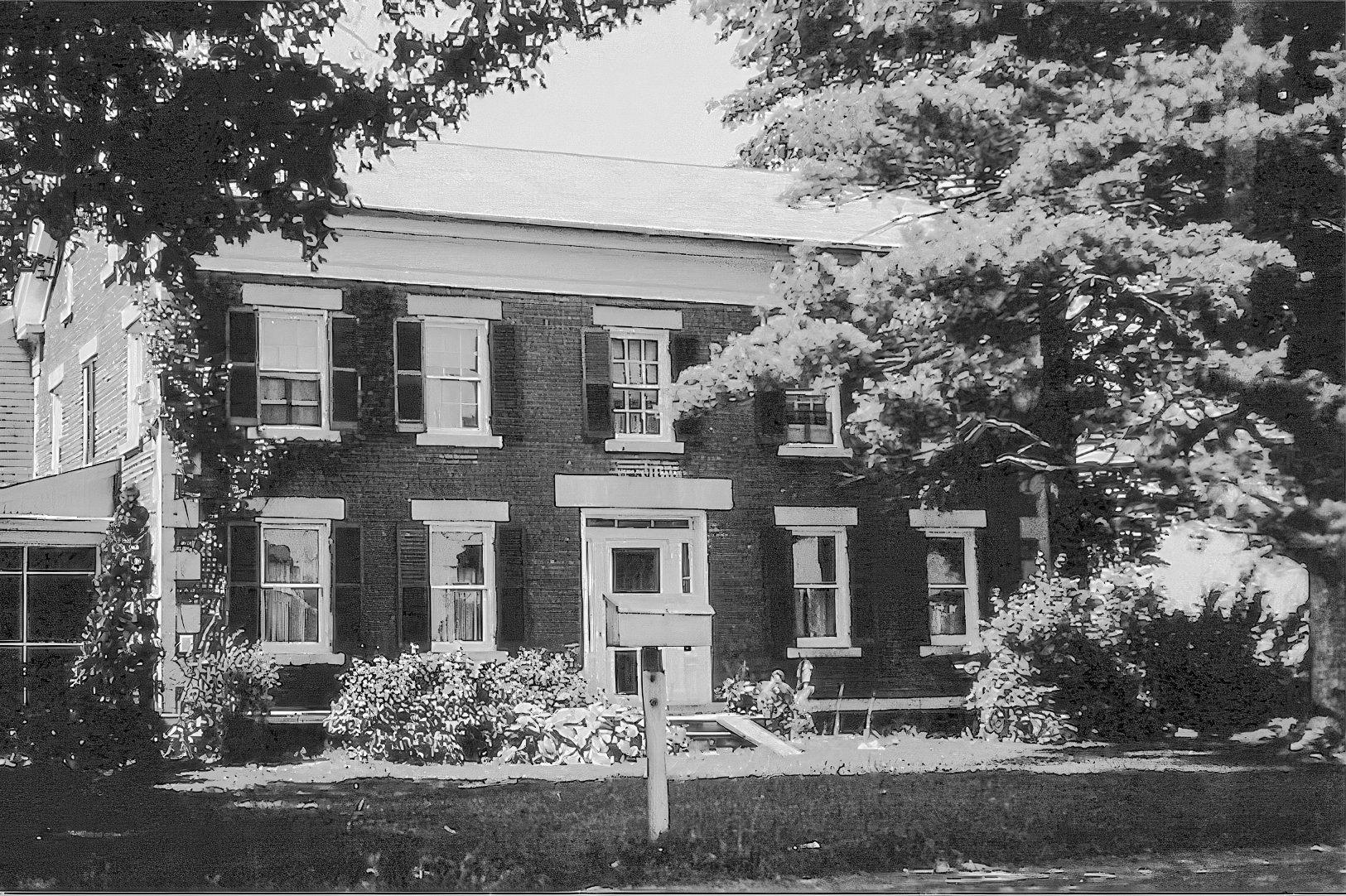 Screen Shot 2019-10-11.jpg Date unknown, thou appears to be earlier 1900s. Screen Shot, Richard Palmer blog. Attribution not provided. | 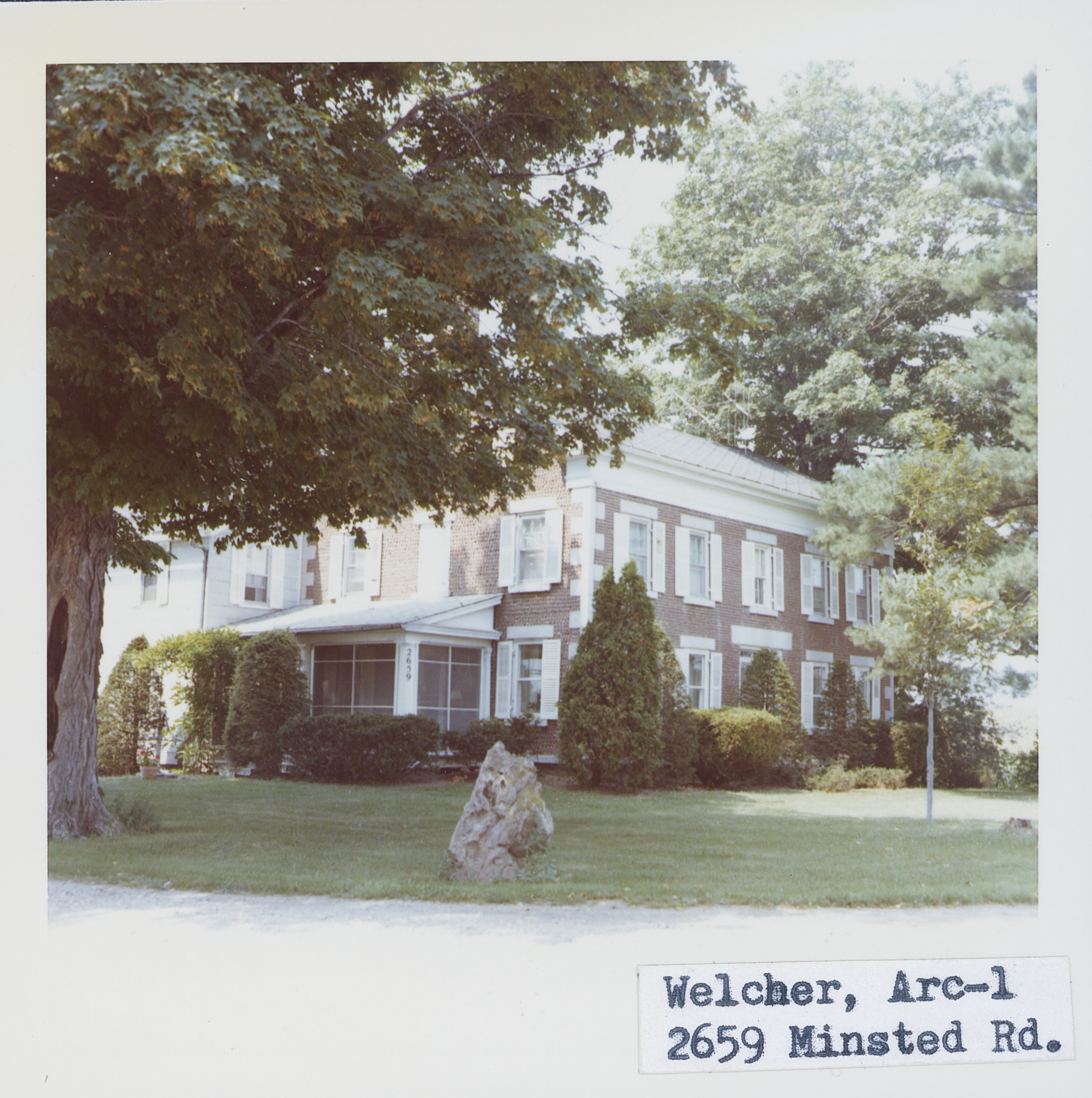 Arc_1_1.jpg | 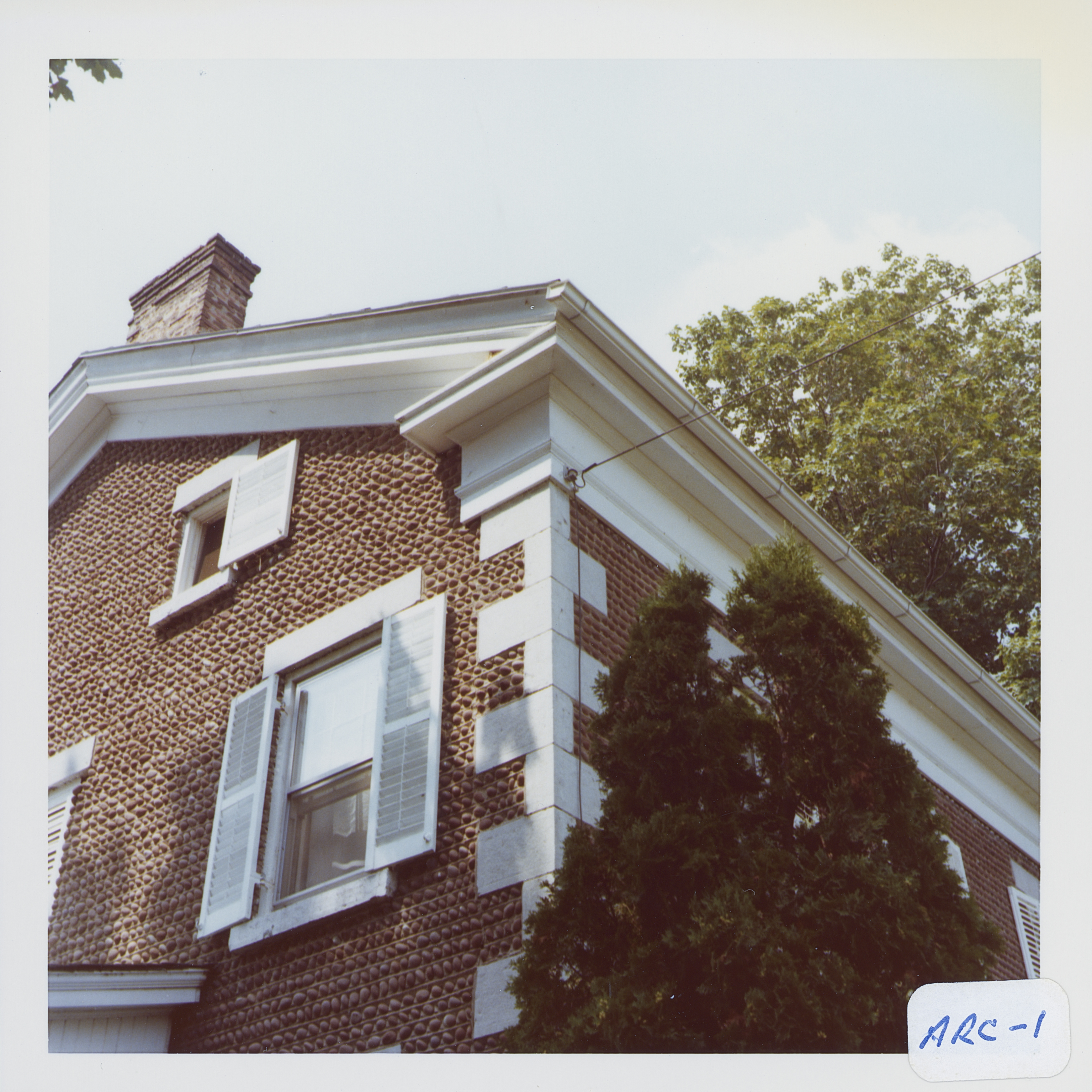 Arc_1_2.jpg | 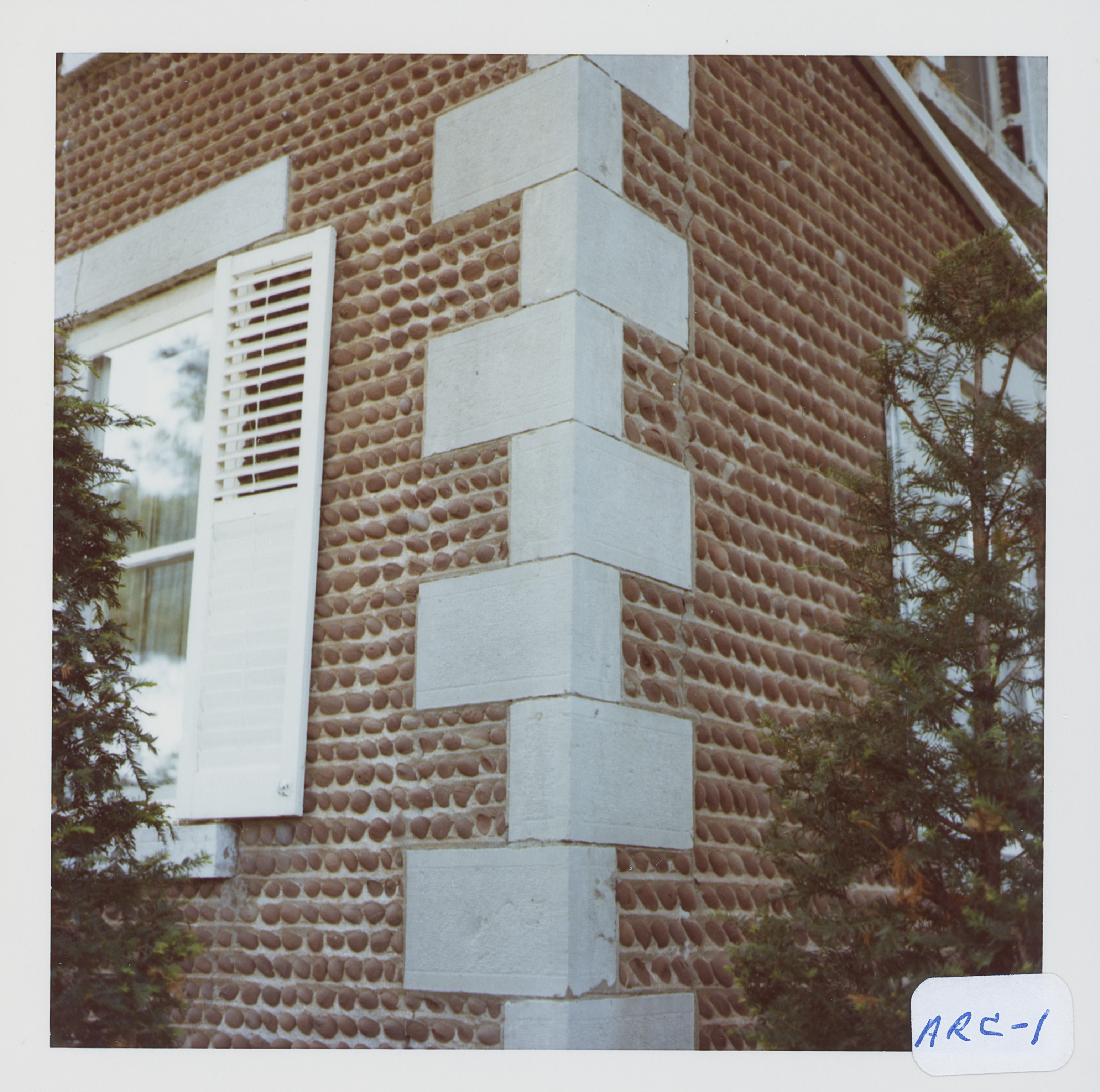 Arc_1_3.jpg |
 Arc_1_4.jpg | 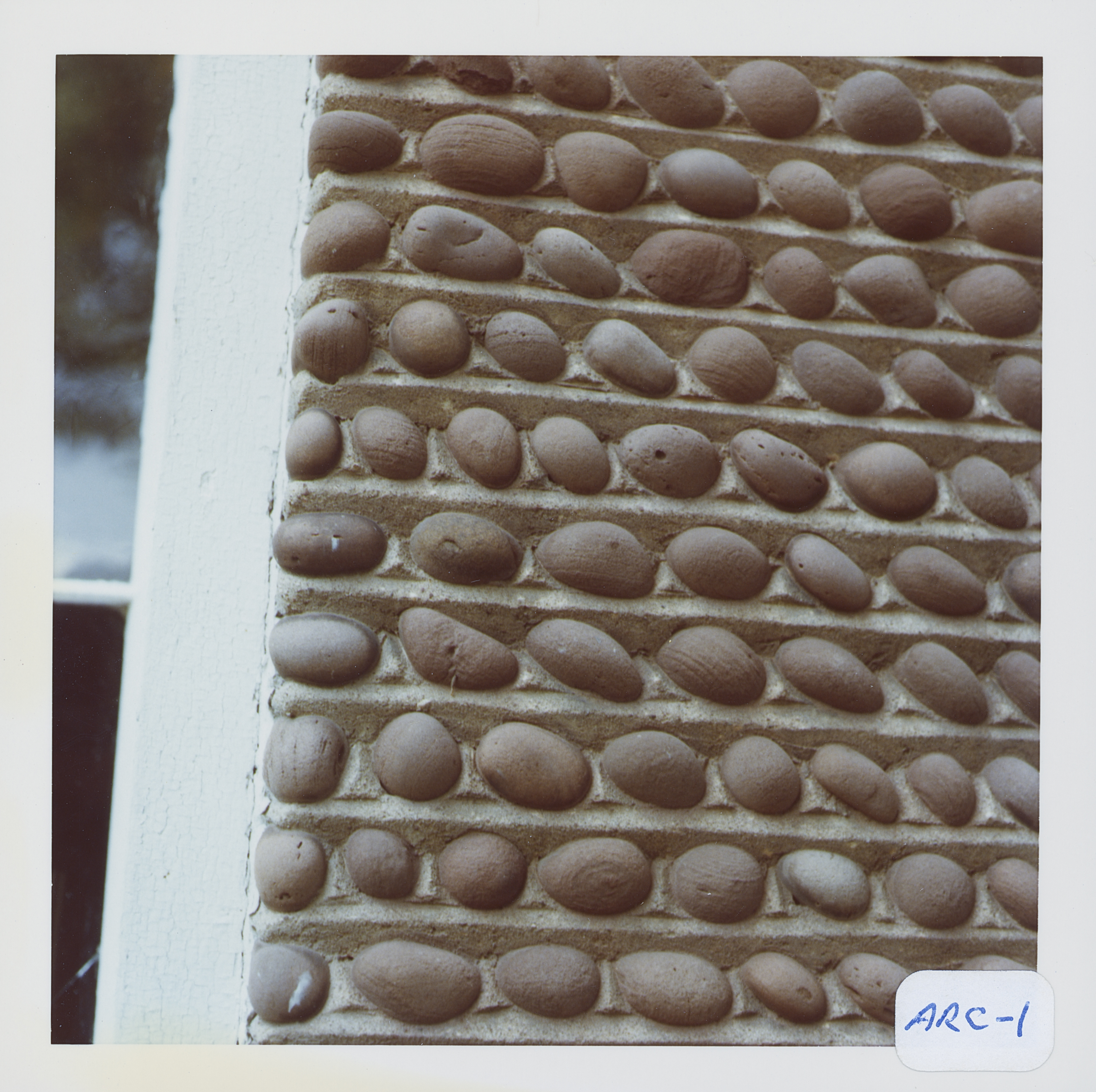 Arc_1_5.jpg | 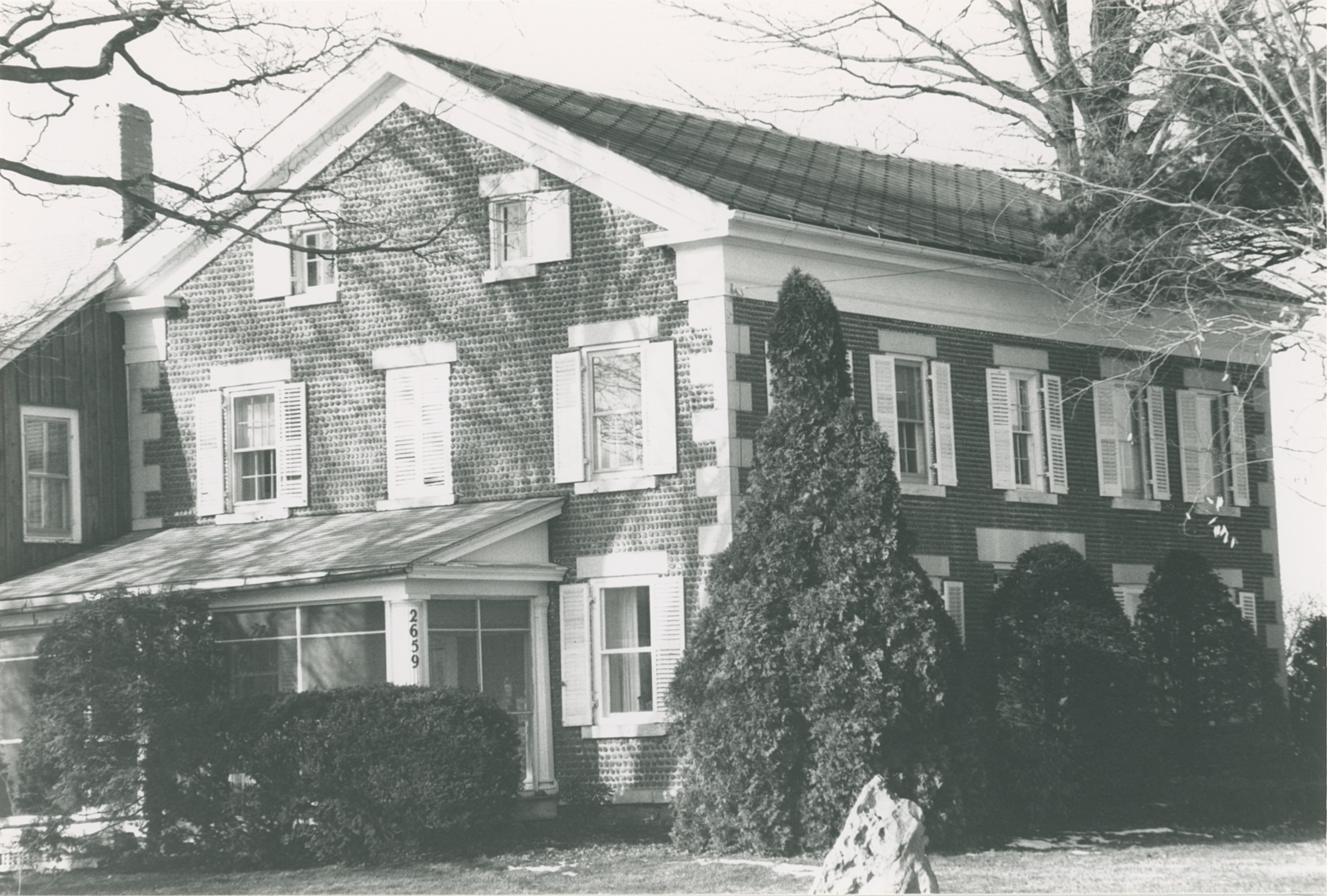 Arc-1 2659 Minsteed Rd 1.jpg ¹ | 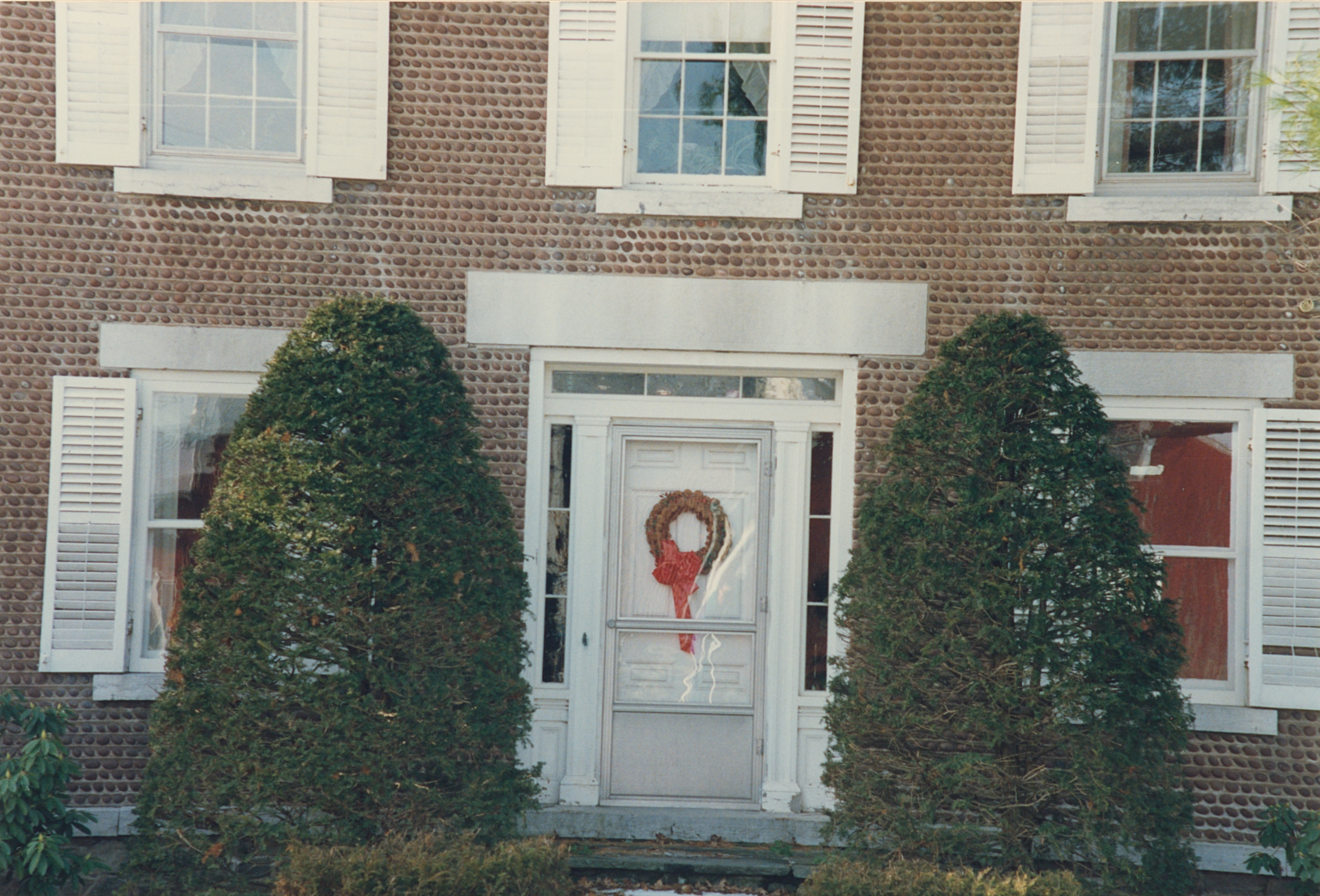 Arc-1 2659 Minsteed Rd 2.jpg ¹ |
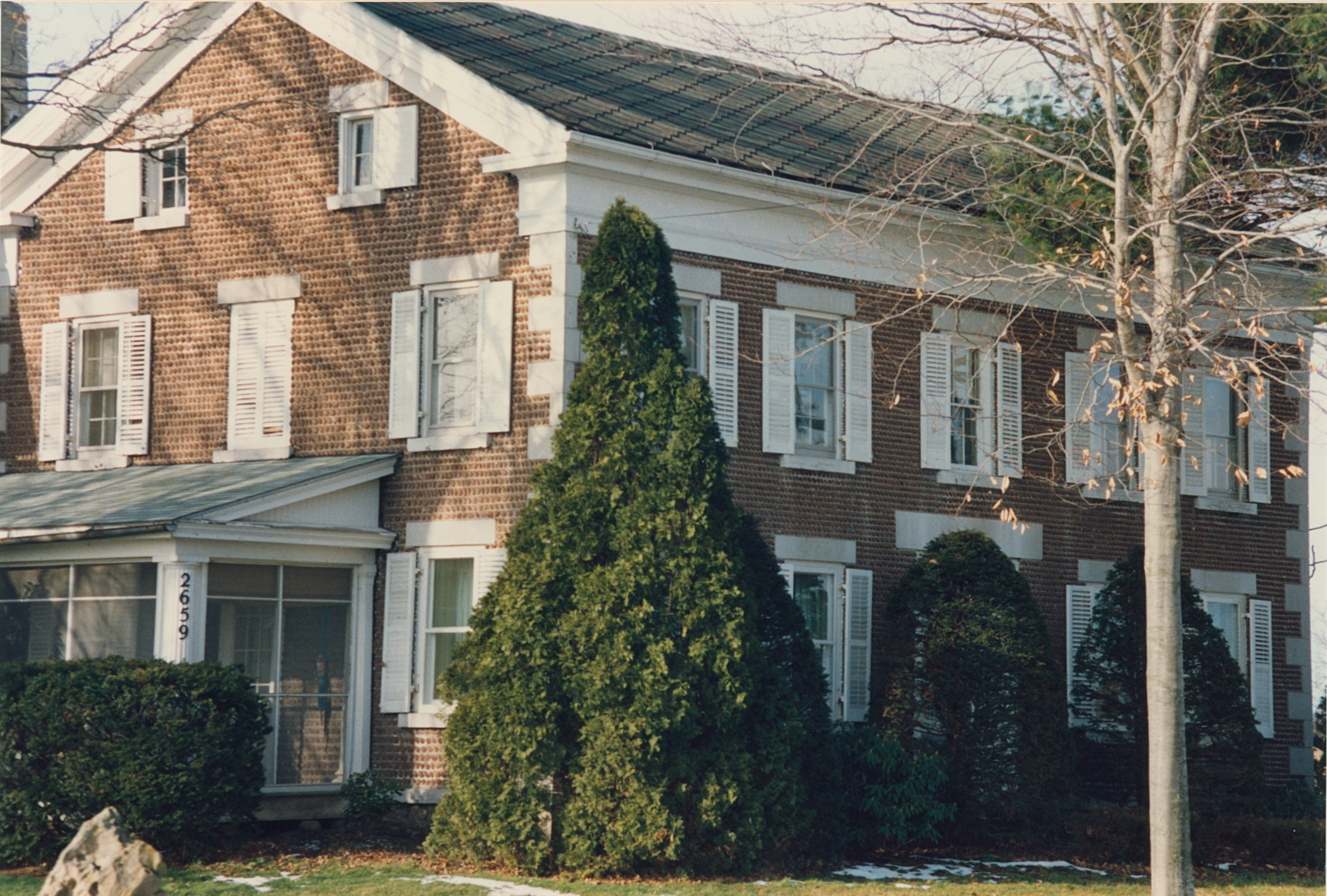 Arc-1 2659 Minsteed Rd 3.jpg ¹ | 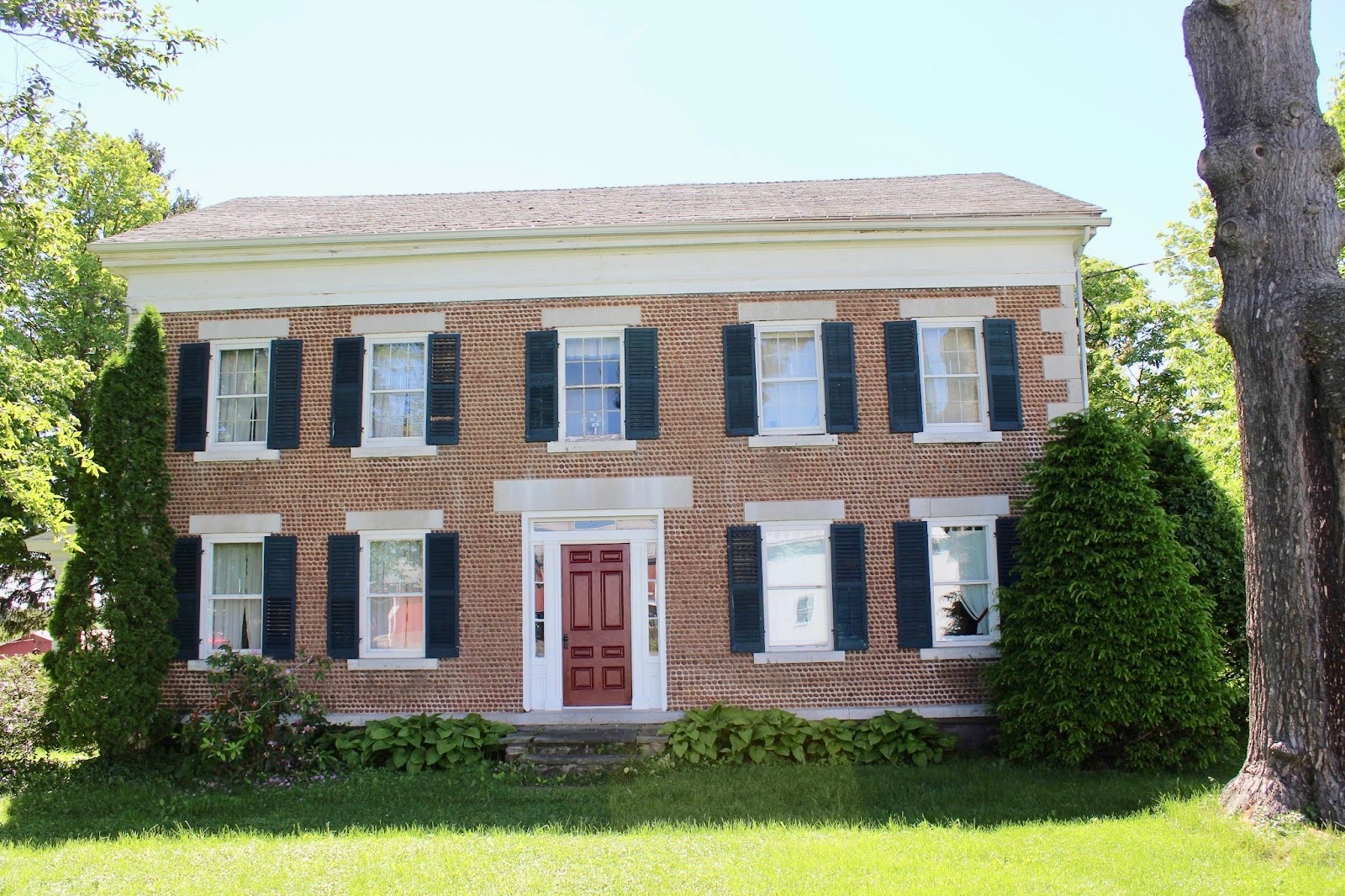 2659 Minsteed Road Newark Arcadia 1.jpg ² | 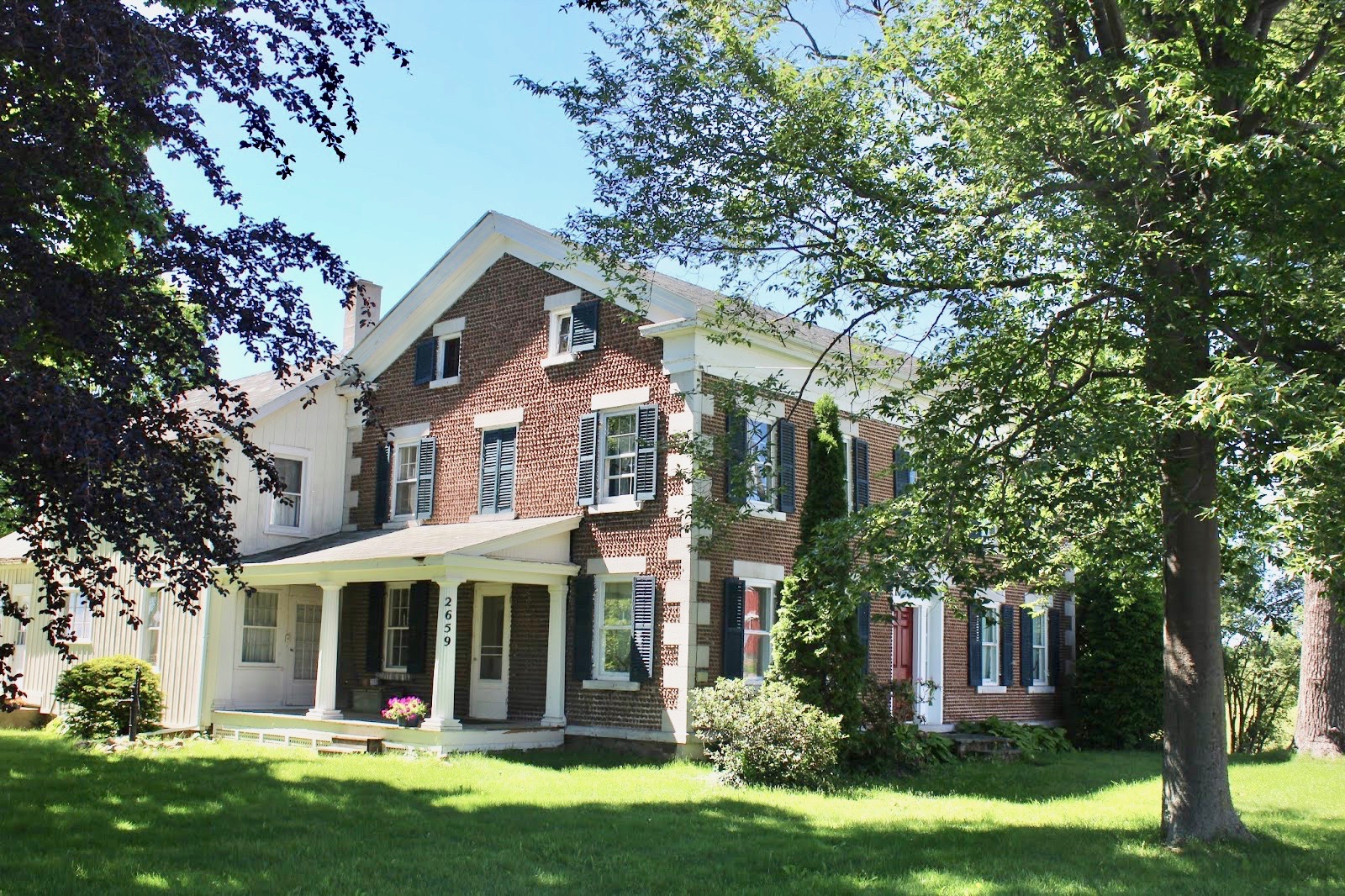 2659 Minsteed Road Newark.jpg ² |
¹ Photography courtesy Martin and Sheila Wolfish.
² Photography courtesy Richard Palmer.
